
Leadership is evolving, and the expectations are shifting with it.
The coaching profession is no longer limited to independent life coaches or wellness experts. It is becoming an essential skillset for leaders, managers, and professionals working within organizations. As companies place greater emphasis on employee development, communication, and performance, the ability to lead through coaching is gaining real traction and strengthening leadership skills across industries.
Whether you are a senior executive, team leader, HR professional, or business consultant, investing in the right coaching certification can elevate your leadership impact, expand your influence, and create a clear competitive advantage.
We’ll explore below, the most relevant coach training programs and certifications for leaders and organizational professionals. We also break down what you gain from becoming a certified coach and how to choose a path that aligns with your goals and builds new skills.
Why are Leaders Turning to Coaching?
The most effective leaders today are not just decision-makers. They are facilitators of growth, accountability, and development who strengthen team members through intentional conversations. Instead of directing or micromanaging, they ask thoughtful questions, create space for reflection, and support their teams in finding their own solutions.
These behaviors are essential to strong leadership and long-term performance and they are core coaching competencies.
Benefits of Leadership Certification

Earning a leadership certification creates meaningful advantages for both individual growth and organizational performance. It strengthens your credibility as a leader, signaling a clear commitment to professional development and a defined, validated skill set rooted in leadership excellence.
Beyond credibility, certification deepens your understanding of leadership principles while equipping you with practical tools grounded in best practices that can be applied in real-world situations. Leaders are better prepared to navigate complexity, manage team dynamics, and respond to challenges with clarity and structure.
As these skills are applied, many leaders experience a stronger sense of engagement in their roles. They are able to foster more supportive and aligned environments, which contributes to improved team performance and higher levels of retention. This often shows up in more effective project management and stronger execution across teams.
Leadership certification also expands your professional network. It connects you with other professionals who are committed to growth, creating opportunities for collaboration, mentorship, and continued learning across industries including software development and business operations.
Over time, the impact extends beyond the individual. Organizations benefit from stronger leadership, more effective communication, and greater adaptability. This contributes to a more resilient and sustainable working environment supported by strategic planning and long-term thinking.
When leaders apply these skills, the impact is measurable:
- Improved team performance and engagement
- Stronger communication and trust
- Greater emotional intelligence and conflict resolution
- Clearer goal-setting and accountability
- More effective navigation of change and complexity
- Increased psychological safety within teams
By integrating executive coaching and organizational coaching approaches, leaders strengthen leadership capabilities and become more adaptable, people-focused, and effective in dynamic environments.
Common Roles That Benefit from Coaching Certification
These skills are highly transferable. If you are in any of the following roles, formal coach training can boost your effectiveness and career trajectory within organizational leadership contexts:
- Executives and C-suite leaders
- HR professionals and talent development specialists
- Learning and development (L&D) directors
- Team leaders and middle managers
- Organizational development consultants
- Change management professionals
- Corporate trainers and facilitators
- Entrepreneurs and business owners
Whether you are coaching internally or planning to transition into an external executive coaching practice, the right certificate program ensures you operate with competence and credibility backed by real years of work experience.
Best Coaching Certifications for Leaders and Organizational Professionals

There are several strong coaching certification paths available. Each offers distinct advantages depending on your professional context and long-term goals.
1. ICF Coaching Certification (International Coaching Federation)
Best for: Leaders seeking global recognition and a structured, professional standard
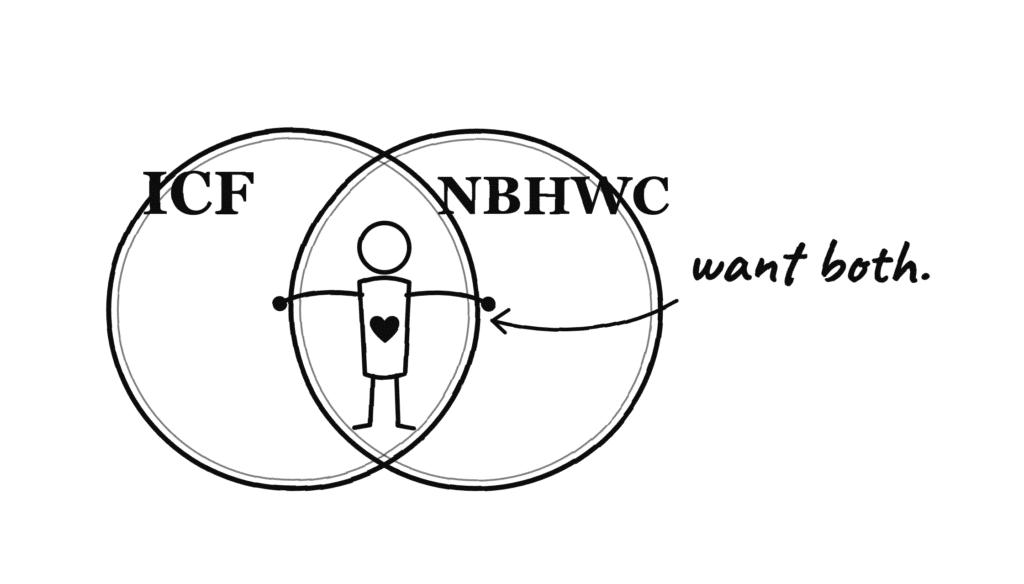
The International Coaching Federation is widely recognized as the leading authority in professional coaching. It sets the standard for coaching competencies, ethics, and practice across industries including public sector organizations and private enterprises.
ICF does not deliver training directly. Instead, it accredits coach training programs that meet its requirements. These programs prepare you for three credential levels:
- ACC (Associate Certified Coach)
Entry-level credential requiring foundational training and coaching experience - PCC (Professional Certified Coach)
Mid-level credential with deeper application and increased coaching hours - MCC (Master Certified Coach)
Advanced credential representing a high level of coaching mastery
Why it’s ideal for organizational professionals:
- Recognized by Fortune 500 companies and leadership development programs
- Deep focus on ethics and core competencies
- Flexible training pathways (Level 1, 2, or 3 programs)
- Opens doors to both internal and external opportunities in the industry
For leaders and organizational professionals, ICF-accredited programs provide a clear framework for skill development supported by comprehensive programs that align with modern leadership demands.
2. Executive Coaching Certification Programs
Best for: Professionals working with senior leaders or focusing on performance and leadership development
Executive coaching programs are designed for those operating at higher levels within organizations and building executive leadership capability.
These programs often include specialized training in:
- Coaching senior leaders and executives
- Navigating organizational dynamics and complexity
- Strengthening emotional intelligence and decision-making
- Supporting leaders through change and uncertainty
- Managing ethical considerations in business environments
They also help professionals develop stronger executive presence, which is essential when working with senior stakeholders.
Programs like these are especially valuable if you are planning to become an external executive coach or contract with leadership development firms. Coach Training EDU’s program Executive Coach Training offers a strong combination of academic rigor and practical application.
3. Team and Organizational Coaching Certification
Best for: Professionals working with teams, group dynamics, and organizational change
Coaching at the team level requires a different skillset focused on leading collaborative teams.
Team coaching focuses on improving collaboration, trust, and collective performance. It is particularly valuable for leaders responsible for group outcomes or consultants supporting organizational transformation.
The ICF Advanced Certification in Team Coaching is designed for experienced coaches who want to work with teams at a professional level.
Key areas of focus include:
- Systems thinking and team dynamics
- Collective goal-setting and accountability
- Psychological safety and inclusion
- Facilitating conversations across complex teams
- Measuring team progress and ROI
This path reflects the growing importance of strategic leadership and strategic management in driving results across organizations.
4. Leadership Coaching within MBA or HR Programs
Best for: Professionals who want coaching tools without transitioning careers
Many universities now offer coaching-focused coursework within MBA, HR, or leadership development programs, often structured as a management certificate program or standalone management certificate.
These programs typically cover:
- Leadership communication
- Coaching conversations in performance management
- Feedback and development frameworks
- Building a coaching culture within organizations
Examples include Georgetown University’s Leadership Coaching Certificate and Harvard’s leadership programs.
They often include clearly defined course topics and a structured application process. While these options may not lead to ICF credentials, they provide practical tools that can be applied immediately within leadership roles and help refine your leadership style.
What to Look for in a Coaching Certification Program
Choosing the right coach training program means looking beyond the marketing and asking some key questions, especially as you evaluate options that support long-term career advancement:
1. Is it ICF-accredited?
If your goal is to coach within organizations or pursue executive coaching, ICF-accredited programs provide recognized standards and are often preferred in organizational settings. These programs also help build a strong foundation for applying coaching in the business world.
2. Does the curriculum include real-world application?
Look for programs that include practice coaching sessions, case studies, and support for applying coaching in a leadership context. The most effective programs integrate essential topics that reflect real workplace challenges.
3. Are mentor coaching and supervision included?
High-quality programs include structured feedback and opportunities to be observed, which is essential for developing competence, confidence, and ICF certification.
4. Is it delivered online or in-person?
Online programs offer flexibility, while in-person experiences can provide deeper immersion. The right format depends on your schedule and learning preferences.
5. What support is offered post-training?
Some programs offer continued mentorship, alumni networks, and professional development resources. These can support long-term growth.
Internal vs. External Coaching Paths
Coaching can be applied in different ways depending on your career direction.
Internal Coaching:
- You remain in your organization and use it with employees, teams, or peers.
- Often supported by HR, OD, or L&D departments.
- Can enhance performance reviews, employee engagement, and succession planning.
External Coaching:
- You leave your current role and launch your own practice.
- Serve leaders and teams in various organizations as a contractor or business owner.
- Often requires more marketing, networking, and business strategy skills.
Many professionals begin internally and expand outward over time. The right coaching certification should support both possibilities.
Frequently Asked Questions

Do I need a coaching certification to coach as a manager?
Certification is not legally required. However, it provides essential structure, ethical guidelines, and proven methodologies. Many organizations now expect leaders who coach to have formal training.
Is ICF the best certification for executive coaching?
ICF is the most widely recognized credential in the industry, particularly in corporate and leadership contexts. It is often preferred by organizations and clients.
How long does it take to get certified?
That depends on the program and credential level:
- ACC: Usually 6–12 months (60+ hours training, 100+ client hours)
- PCC: Often 12–24 months (125+ hours training, 500+ client hours)
- Programs vary in pace depending on whether they’re self-paced, cohort-based, or immersive.
Can coaching help my leadership even if I don’t want to be a full-time coach?
Yes. It is one of the most valuable skillsets for leaders. It enhances communication, strengthens relationships, and improves how leaders develop talent and manage change.
Final Thoughts: Coaching as a Catalyst for Leadership Growth
Leadership is moving toward connection, clarity, and collaboration. Which means these skills are no longer optional. They are becoming a foundational part of effective leadership.
This shift is not subtle. It is reshaping how organizations operate, how teams communicate, and how decisions are made. Leaders are expected to do more than deliver results. They are expected to develop people, create alignment, and sustain performance over time.
Whether your goal is to strengthen your leadership approach, support your organization more effectively, or expand into coaching as a profession, the right certification provides the structure to do so with confidence.
It offers more than knowledge. It builds consistency in how you show up, how you listen, and how you guide others through challenges. It gives you a repeatable framework you can rely on in complex situations.
You already bring experience and insight. Coaching training builds on that foundation, helping you lead in a way that develops others, strengthens teams, and supports long-term success. Over time, this approach compounds. Conversations become more intentional. Teams become more accountable. Outcomes become more sustainable. That is where coaching creates its real impact.
Ready to take the next step? Explore Coach Training EDU’s ICF-accredited programs designed specifically for leaders and organizational professionals looking to up level their career prospects.