

When I first started asking for practice coaching clients, I got mixed results. A few yeses, a few no’s, and enough hesitation to make me realize the ask mattered as much as the coaching.
That process also shaped my specialty. I began thinking I would coach educators. Then the work pulled me toward high school students, then college students. Along the way, I also stepped into executive coaching when I was contracted by an executive coaching firm to coach leaders inside some of Portland, Oregon’s most innovative companies. Each shift taught me more about what people actually need, and what makes them willing to say yes.
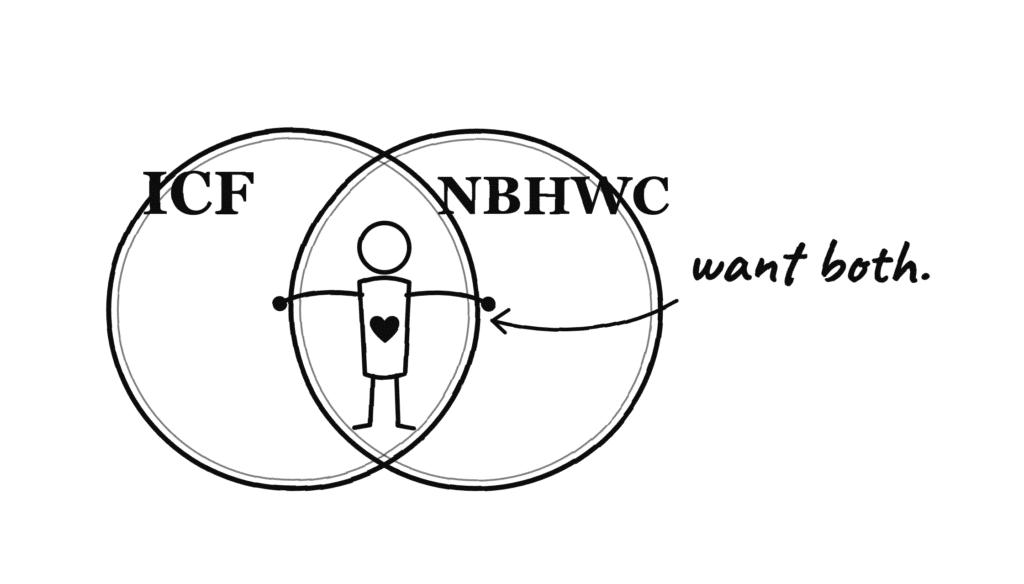
Later, when I built a coach training program, I saw the same struggle show up again and again. Smart, capable coaches in training getting stuck at the practice client stage, not because they lacked skill, but because the invitation felt awkward, unclear, or too easy to misread. And to add to the pressure, the ICF and NBHWC and other organizations setting standards for certified and credentialed coaches have requirements for new coaches to log a certain number of practice hours. Some of those can be practice clients. Hence the usual rite of passage new coaches must undertake to ask their friends and family to be clients for them to practice their newly founded skill set.
So I took what I learned firsthand and turned it into concrete steps that reliably help. The ideas below are practical, repeatable, and grounded in one key insight: the yes gets easier when you understand both perspectives, yours and your potential client’s. Also Coach Training EDU has also launched Coach Theory, a coach client matching app designed to help coaches reach their first 100 hours by connecting them with real clients in a clear, structured way. It’s one option when you want support and momentum built into the process. For now, though, let’s focus on pathways you can start using immediately to enroll your first practice clients, steps that often lead to paid clients not long down the road.
But for now… let’s take a look at the top five things that make the path from first ask to yes much smoother.
Top 5 Things I’ve Learned

For many coaches, this stage marks the beginning of a larger coaching journey. Whether you plan to build a full coaching business or simply want to strengthen your skills, securing practice clients is often the first meaningful step. The good news is that this phase lays the foundation for clarity, confidence, and sustainable growth, regardless of whether you identify as a life coach, business coach, or career coach.
This early work supports your long-term coaching practice and prepares you to offer coaching services with integrity. Many successful coaches look back on this phase as the best part of their development, because it’s where real learning begins.
1. Conduct Ideal Client Profiles Before You Ask for Practice Coaching Clients
Listen First, Invite Second

Before you ask anyone to be a practice coaching client, spend time learning how people experience the challenges you are interested in working with.
Many new coaches move quickly toward logging hours, which can lead to asking people for a commitment before there is clarity about who they serves best, how people describe their challenges, or what they are already doing to address them.
Start instead with short, low pressure conversations designed to help you listen and learn. Ask for 20 to 30 minutes to talk about a challenge someone is currently navigating. Invite them to share what they have tried, what has helped, what has not, and what still feels unresolved.
These conversations help you hear real language rather than imagined pain points. Over time, patterns begin to emerge. You gain confidence in how to describe the work, and your eventual invitation to a practice session comes from understanding rather than urgency.
Why Listening Is Part of Your Training
Another benefit of these early conversations is that they remove pressure from both sides. You are not asking for anything yet, just simply listening. That shift alone can make the interaction feel more generous and human. People are often willing to talk about their experiences when they don’t feel like they are being evaluated or recruited.
As a coach, this listening phase is also part of your training. You’re learning how to sit with uncertainty, notice patterns, and reflect back what you’re hearing. By the time you do invite someone into a practice session, you’re no longer guessing at relevance and instead responding to something real they’ve already named, allowing you to see your ideal customer.
Clarifying Direction and Fit
As you listen and learn, you’ll naturally begin to clarify your coaching niche and identify your target audience. These insights make it easier to recognize a good fit when someone expresses interest and to speak confidently about the specific problem you help people think through.
This clarity also helps you attract potential coaching clients who resonate with your approach, rather than trying to appeal to everyone. Over time, this discernment becomes one of the best ways to build trust and momentum with new coaching clients.
2. Address the Advice Myth

Coaching Is Not Advice and That’s the Point
One of the most common assumptions about coaching is that it involves listening to someone’s problems and offering solutions or advice.
For many people, advice feels uncomfortable, especially when it is unsolicited. It can register as judgment, a loss of control, or a signal that their situation has been oversimplified.
If this assumption goes unaddressed, people may hesitate to say yes because they imagine being analyzed, corrected, or told what to do.
When you talk about practice coaching, take time to explain how those conversations actually work. Describe the focus on thinking, perspective, and choice. Let people know that the conversation centers on helping them explore their own ideas rather than receiving instructions.
This clarification alone often reduces resistance and opens curiosity.
Why Clarity Creates Safety
Naming what coaching is not can be just as important as explaining what it is. When people understand that they won’t be told what to do, corrected, or evaluated, the conversation immediately feels safer. Safety is often the deciding factor between hesitation and openness.
You don’t need a long explanation. A simple distinction such as “coaching isn’t advice-giving; it’s a space for thinking” can be enough. When people realize they get to stay in the driver’s seat, curiosity tends to replace resistance.
Positioning Yourself Professionally
Addressing misconceptions about coaching also reinforces your credibility as a certified coach in training. Whether you ultimately serve as a health coach, fitness coach, or work in life coaching, clear language helps people understand the value of the process without pressure.
This is especially important as you begin to receive new clients beyond friends and family. When people feel informed, they’re more open to exploration and more likely to say yes to a free consultation or introductory session.
3. Start With Just One Session

Lower the Barrier to Entry
An ongoing coaching commitment can feel like a lot to someone who has never experienced it.
Weekly sessions, emotional investment, and follow through sound demanding, especially to people who already feel stretched thin. Even if they are interested, the size of the request can make it easy to say no.
Begin with a single session.
A one time conversation feels approachable and realistic. It allows someone to experience coaching without pressure or expectation. This approach also mirrors how many professional coaching relationships begin, with an initial session to explore fit and value.
For you, each session still builds skill and counts toward your hours. For them, it feels like a meaningful conversation rather than an obligation.
Why Small Asks Lead to Better Yeses
A single-session invitation also helps you as a coach. It allows you to focus on presence and practice rather than outcomes or retention. You can show up fully without worrying about whether someone will commit long term.
Many practice clients decide what coaching is based entirely on their first experience. By keeping the ask small, you increase the likelihood they’ll say yes. And if the session is valuable, future conversations tend to unfold naturally without pressure from either side.
Momentum Through Small Wins
Each session you facilitate builds confidence and contributes to the hard work of becoming a skilled coach. Your first coaching clients and first clients aren’t just hours logged. They’re lived experience.
Many coaches discover that the fastest way to grow is not by scaling prematurely, but by refining presence and process one conversation at a time. This steady approach prepares you for a sustainable online coaching business if you choose that path later.
4. Network Thoughtfully, Including Your Classmates
Shift From Asking to Sharing
Asking for practice coaching clients can feel awkward when the request is framed only around your own needs.
One way to ease this tension is to widen the scope of the conversation. When networking, share that you are part of a cohort of coaches who are learning and practicing together. Ask whether someone knows anyone who might be interested in exploring coaching, including classmates who are also building experience.
This shifts the dynamic from self focused asking to shared opportunity. You may not be the right coach for a particular person, but someone in your training group might be.
When requests are shared across a community, opportunities expand and the process feels more natural.
Let Community Do Some of the Work
There is also value in practicing with peers who understand the learning curve. Classmates and fellow trainees often make excellent practice clients because they appreciate the process and offer thoughtful feedback. These exchanges strengthen skill while reinforcing community.
When you treat networking as relationship-building rather than client-seeking, the tone shifts. People become collaborators rather than prospects. Over time, this approach creates a wider, more supportive ecosystem where practice opportunities circulate more easily.
Expanding Reach
As your network grows, opportunities often arise through new people you didn’t initially expect. Sharing context, not sales pitches, allows others to naturally refer those who might benefit from coaching.
This relational approach complements any broader marketing strategy you adopt later and ensures your early efforts genuinely offer value, rather than feeling transactional.
5. Develop Your Lead Magnet
Create Value Before the Ask
A lead magnet gives people a way to engage with you without committing right away.
This might be a short guide, a reflection exercise, a worksheet, or a brief workshop. The goal is usefulness rather than polish. When someone finds value in a small offering, they begin to understand your perspective and approach.
Later, an invitation to a practice session feels like a continuation rather than a cold request.
For practice coaching clients, a lead magnet creates context and familiarity. It answers the question of why this conversation matters and why now. Over time, it also helps you move beyond relying only on friends and family as you build experience.
How Lead Magnets Support Your Development as a Coach
Creating a lead magnet also helps you clarify your own thinking. Distilling an idea into a short guide or exercise forces you to articulate what you care about and how you approach change. That clarity shows up in your conversations.
For practice coaching clients, a lead magnet lowers the barrier to entry. It offers a way to say yes without risk. When someone engages with your material first, the invitation to a practice session feels familiar, intentional, and aligned rather than sudden or transactional.
Visibility Without Pressure
Your lead magnet can also support visibility in search engine discovery over time. A well-written blog post, paired with thoughtful guest posting, helps your ideas surface in search results for people already curious.
This content doesn’t need to be complex. Sharing valuable insights consistently helps build trust and supports future growth through an email list, which remains one of the most reliable ways to stay connected.
Concrete Ways to Articulate the Value of Coaching to Practice Clients

One of the biggest hurdles for new coaches is the language. You know coaching works, but when it comes time to invite people to be practice coaching clients, many coaches hesitate. They don’t want to sound salesy or overpromise. The truth is, articulating the value isn’t really about persuasion. Instead, you’re trying to bring clarity.
One effective way to communicate value is to focus on the experience rather than the outcome. Instead of explaining what coaching will “fix,” describe what it feels like. You might say, “Coaching gives you a dedicated space to slow down, think out loud, and gain clarity on what matters most.” Practice coaching clients don’t need guarantees. They need to understand why the process itself is worth their time.
Another helpful frame is to position coaching as a structured conversation with a purpose. Unlike talking with friends or colleagues, it isn’t about advice or opinions. You can say, “Coaching is a space focused entirely on you: your goals, your values, and your choices without judgment.” This makes the value concrete and distinct.
Finally, name who coaching is for. Coaching is especially helpful during transitions, decisions, or moments when something feels off but the next step isn’t clear. When you speak clearly about the role coaching plays, you give others permission to say yes. Not to you, but to themselves.
So Where Can I Find Practice Clients?

To secure practice coaching clients, start by leveraging your network. Offer free introductory sessions to showcase your skills. Utilize social media platforms for promotion and join relevant groups to connect with potential clients. Additionally, consider creating engaging content that addresses common coaching questions in your niche to attract interest.
Public Speaking and Community Engagement for Client Acquisition
Let the Room Do the Work for You
One of the overlooked benefits of community speaking is that it pre-qualifies interest. When someone attends a talk, workshop, or discussion, they’ve already opted into reflection. You don’t need to convince them coaching is relevant because the environment has already done that. Your role is simply to facilitate a moment of insight and name coaching as one possible way to continue the conversation.
At the end of a session, keep the invitation light and clear. A simple offer such as a one-time practice conversation to explore what came up for them respects their autonomy while opening the door. The more ease you bring to the invitation, the safer it feels to say yes.
It also helps to remember that not everyone in the room is meant to become a client. Your goal isn’t volume; it’s resonance. When even one or two people feel genuinely impacted, those conversations often lead to meaningful practice hours and referrals that grow organically from there.
Community speaking also helps you practice trusting the process. When you focus on facilitating insight rather than securing outcomes, you model the very essence of coaching. The right people will self-select, often days or weeks later, once they’ve had time to reflect. By releasing the need to capture every opportunity in the moment, you create space for more aligned and sustainable relationships with practice coaching clients to emerge.
Community speaking works best when it feels like facilitation, not performance. You’re creating a space for insight, not delivering expertise.
Facilitate insight, not expertise.
Shift from teaching frameworks to asking thoughtful, open-ended questions. When people discover their own answers, the learning is deeper and more sustainable.
- Create space for reflection.
Build in pauses, journaling moments, or small group conversations. Reflection helps regulate the nervous system and allows insights to land, which naturally increases engagement. - Keep your invitation simple and choice-based.
Offer a next step that respects autonomy, such as a complimentary practice conversation. Clear and low-pressure invitations feel safe and aligned with coaching values. - Focus on connection over conversion.
You don’t need everyone in the room to say yes. One or two meaningful conversations often lead to richer practice hours, stronger relationships, and organic referrals. - Trust the process and let interest self-select.
When you prioritize presence and service over outcomes, the right clients emerge naturally. Community speaking works best when it feels like partnership, not performance.
When you approach public speaking as facilitation rather than persuasion, you embody coaching from the very first interaction, and that authenticity is what people remember.
Leveraging Digital PR and Online Platforms
Borrowed Trust Builds Real Momentum
Appearing on someone else’s platform allows you to step into an existing relationship of trust. Listeners or readers are already engaged, already curious, and often already reflective. This makes digital PR especially effective for practice coaching, where the goal is exposure and experience rather than immediate conversion.
When you show up consistently across platforms, something subtle but important happens: people begin to recognize your voice. Over time, that recognition turns into credibility. Practice coaching clients often reach out not because of a single appearance, but because they’ve encountered you multiple times and feel they know how you think.
Digital PR also gives you language. Hearing yourself speak about coaching in different contexts helps refine how you describe the work. That clarity carries forward into one-on-one conversations, making your invitations sound grounded rather than rehearsed.
Another advantage of digital PR is that it extends the lifespan of your work. A podcast episode or article can continue to reach people long after it’s published, allowing practice coaching clients to find you at the moment they’re ready. This removes pressure from the ask and lets interest develop organically, supported by repeated, low-effort exposure to your perspective.
Digital PR builds momentum over time. The goal is recognition, not instant results.
As your confidence grows, you may explore different marketing tactics across social media channels that align with your style and target customers. These platforms can support awareness without requiring constant promotion.
The goal is for your words to resonate, not to reach everyone for the sake of reaching. When your message aligns with your values, the right people find you.
Next steps to try:
- Pitch one podcast or blog per month.
- Focus on topics you genuinely care about.
- Reuse appearances across email and social media.
Maximizing Social Media Presence (Especially Social Groups)
Participation Builds Permission
In group spaces, trust is built through contribution, not credentials. When you consistently add value by listening well, reflecting patterns, or asking thoughtful questions, you earn permission to be seen as a coach without ever announcing yourself as one.
When someone does inquire about your work, resist the urge to explain everything. A simple, grounded description followed by an invitation to explore coaching in a low-pressure way is enough. Practice coaching clients often emerge from ongoing presence, not one-time posts.
Spaces such as Facebook Groups, reward patience. The longer you stay engaged without an agenda, the more natural it feels when coaching enters the conversation. By the time you extend an invitation, it often feels like a continuation of trust already built.
These spaces also offer real-time feedback. The questions people ask, the language they use, and the challenges they name all help you refine how you talk about coaching. Over time, your responses become clearer and more resonant, making the transition from conversation to practice session feel seamless rather than forced.
Groups reward contribution and patience. When you engage without an agenda, coaching emerges naturally.
Tips for group participation:
- Comment more than you post.
- Reflect what people share.
- Ask thoughtful follow-up questions.
Using YouTube and Video Content for Coaching Outreach
Let Your Presence Be the Message
Many people decide whether they want to be coached by someone long before they understand what coaching is. Video accelerates that decision by making your presence tangible. Viewers get a sense of how you listen, how you pause, and how you invite reflection, which are all core coaching skills.
Think of video not as content creation, but as practice. Each recording strengthens your ability to articulate coaching clearly and confidently. Over time, this clarity carries into live conversations, making the invitation to practice coaching feel more natural and grounded.
Video also allows people to approach coaching privately and at their own pace. For practice coaching clients who may feel unsure or hesitant, this gentle entry point can make all the difference.
Video also builds familiarity before a conversation ever happens. When someone reaches out, they often feel like they already know you, which lowers anxiety on both sides. That sense of recognition helps practice sessions start with more openness and trust, allowing the coaching itself to unfold more quickly and naturally.
Video helps people feel you before they meet you. It doesn’t need to be perfect to be effective.
Tips to get started:
- Keep videos under 10 minutes.
- Record in one take.
- Speak to one person, not an audience.
Building and Using a Newsletter List
Consistency Builds Confidence For You and Them
A newsletter isn’t just a relationship-building tool for readers; it’s a confidence-building tool for coaches. Writing regularly helps you refine your language, clarify your perspective, and articulate the value of coaching with increasing ease.
When it’s time to invite practice coaching clients, you’re no longer starting from scratch. You’re extending an invitation to people who already understand how you think and what you value. That familiarity reduces resistance and makes the decision to try coaching feel informed rather than risky.
Over time, a newsletter becomes a quiet record of your development as a coach. Readers grow alongside you, and practice clients often say yes because they’ve already experienced the impact of your thinking.
A newsletter also creates a rhythm of trust. When people hear from you consistently, without pressure or performance, your voice becomes familiar and reassuring. By the time you invite someone into a practice session, the relationship already feels established, making the step into coaching feel like a natural continuation rather than a leap.
A newsletter builds trust through repetition. It gives you a reliable place to practice articulating coaching.
Next steps to begin:
- Choose a simple cadence (biweekly works well).
- Share reflections or questions.
- Invite reply. Conversation builds trust.
Hosting Workshops and Events for Lead Generation
Design for Experience, Not Conversion
The most effective workshops don’t try to turn attendees into clients on the spot. Instead, they give people an authentic experience of coaching: space to think, reflect, and notice what shifts when they slow down.
At the close of an event, name what just happened. Help participants connect their experience to the coaching process. From there, a practice session feels like a logical continuation, not a sales move. People are far more likely to say yes when they understand what they’re saying yes to.
Workshops also build your confidence as a facilitator. Each event sharpens your ability to hold space, manage time, and trust the process, which are all skills that translate directly into one-on-one coaching.
Workshops also create shared language. When participants leave with a common experience to reference, follow-up conversations feel easier and more grounded. That shared context allows you to invite practice sessions as a continuation of something already meaningful, rather than a brand-new request.
Workshops let people experience coaching directly. When designed well, the invitation to continue feels natural.
Design principles:
- Focus on one theme.
- Build in reflection time.
- Leave space for questions.
Innovative Places to Find Practice Clients Beyond Traditional Networking
Follow Curiosity, Not Strategy
Some of the best practice clients come from places where coaching isn’t expected. When you engage in communitiesyou genuinely care about, conversations unfold naturally. Over time, people begin to ask deeper questions—and that’s often where coaching becomes relevant.
Rather than leading with what you do, lead with how you listen. When coaching is introduced as a supportive resource at the right moment, it feels aligned and respectful. In these spaces, practice clients often find you before you ever go looking for them.
This approach also keeps the process human. Instead of chasing hours, you’re building relationships. And those relationships tend to produce practice experiences that are richer, more meaningful, and more sustainable over time.
These environments also tend to invite longer-term connection. When coaching emerges from genuine relationship rather than transaction, practice sessions feel grounded in trust and mutual respect. The hours you log this way often carry more depth, making the learning experience just as valuable as the requirement being met.
When you follow curiosity rather than strategy, coaching opportunities arise organically.

Finding practice coaching clients is about learning how to invite with clarity, confidence, and care. Each of these approaches helps you move from obligation to alignment, from “needing hours” to building real coaching relationships that support your growth even beyond your coaching program.
What matters most is that this phase supports your development. Practice coaching clients help you refine your voice, understand your impact, and build confidence in the work itself.
Over time, these early experiences shape the coach you become and prepare you to serve with clarity, integrity, and ease.
If you’re looking for a structured, supportive environment to deepen your skills, refine your language, and gain practice hours in a way that feels grounded and human, Coach Theory is designed to meet you there. Learn more about Coach Theory and how it supports new coaches in building confidence, competence, and meaningful practice from the very beginning.